
Published on October 7, 2026
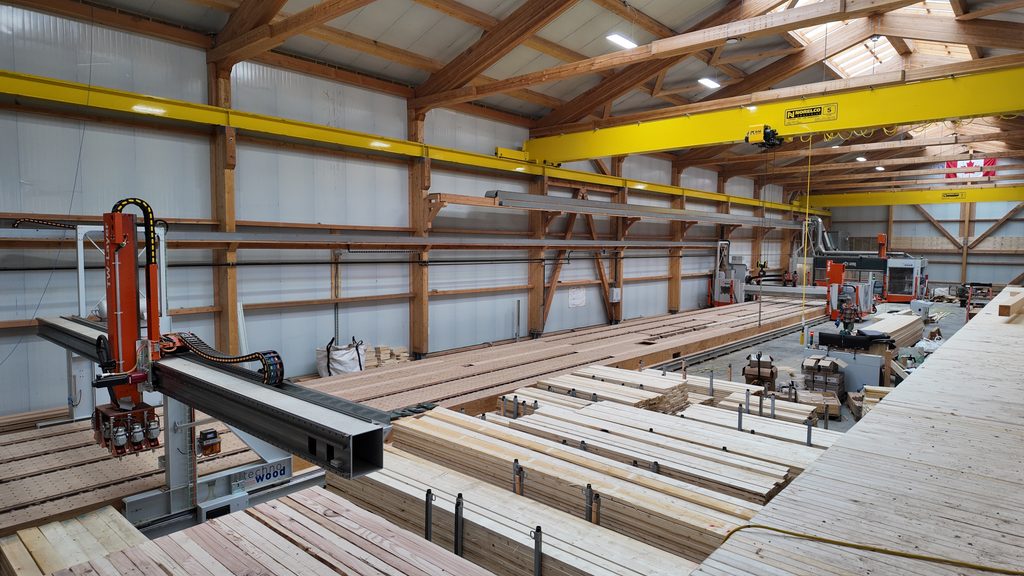
OT Timber Frames is expanding its manufacturing capabilities with the launch of the BC Wood Panel, a new solid wood structural panel system manufactured at our facility in 150 Mile House, British Columbia.
The expansion introduced both dowel-laminated timber (DLT) and cross-dowel-laminated timber (CDLT) manufacturing at OT Timber Frames, supported by a new 12,000-square-foot production shop to house our TWOODS production line. For us, this expansion represents a significant step forward – bringing together decades of timber construction experience with advanced manufacturing technology to create a new generation of solid wood building components.
Introducing the BC Wood Panel: A Solid Wood Structural System
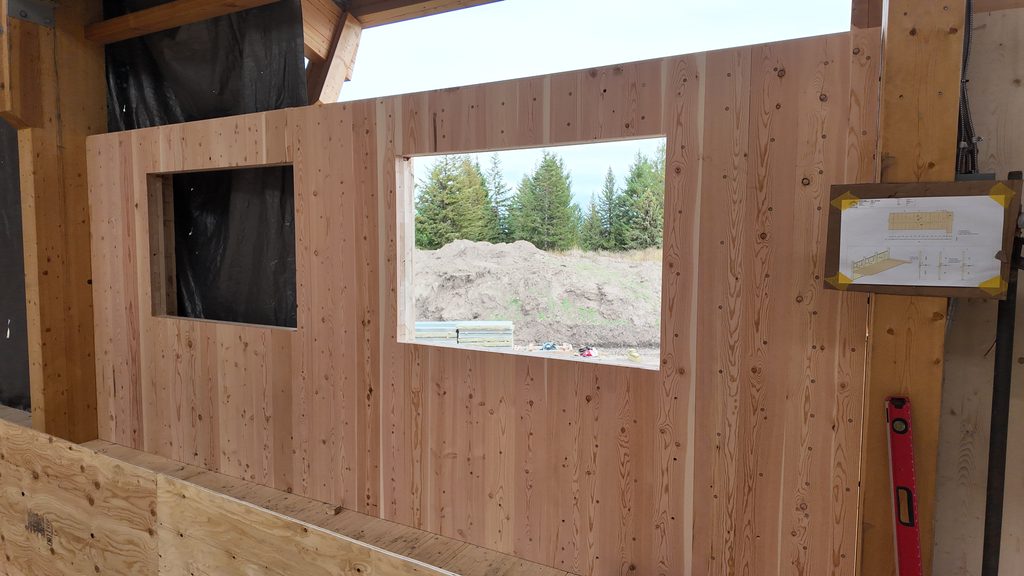
The BC Wood Panel is made from rough-sawn wooden boards arranged in alternating crosswise, lengthwise, and diagonal layers. Rather than relying on structural adhesives or metal fasteners, the layers are mechanically locked together using compressed hardwood dowels. The varying board orientations provide stability in multiple directions and help limit movement within the finished panel, creating a solid, load-bearing building component suitable for a range of structural applications.
This all-wood approach creates a fully bio-based panel for residential and commercial construction, offering another option for projects where material composition, sustainability, and indoor environmental quality are priorities. Manufactured exclusively from regional wood sourced in British Columbia, the BC Wood Panel connects local forest resources with advanced manufacturing. From the raw material to the finished building component, its production remains rooted right here in BC.
From Rough-Sawn Boards to Finished Building Components
The BC Wood Panel is produced on our new TWOODS production line, which integrates boards placement, assembly, dowelling, and precision machining in a continuous manufacturing process.
Production begins at the TW-Layer, where rough-sawn boards are placed in alternating crosswise, lengthwise, and diagonal directions to form the body of the panel. The assembled layers are then temporarily nailed together with wooden nails and rolled to the TW-Fix. Here, the panel is pressed tightly together, and holes are drilled through the layers at precise locations before compressed hardwood dowels are inserted with a light spray of water. As the dowels absorb the moisture, they expand, creating a mechanical clamping effect that locks the layers together. The result is a structural solid wood panel assembled without structural glue or metal fasteners. The panel then moves further down the table to the TW-Mill, a five-axis CNC machine that completes the outer profile, edges, openings, grooves, connections, and other project-specific details.
Expanding Our DLT Capabilities
The new facility also includes a dedicated DLT production pit capable of manufacturing dowel-laminated timber panels up to four feet wide and forty-five feet long. These panels can be used for structural floor and ceiling systems, expanding the range of solid wood components that we can manufacture.
One of the key advantages of both DLT and CDLT is the flexibility they offer in material selection, surface treatment, and final appearance. Panels can be produced in a wide range of wood species, including Douglas Fir, Spruce, Birch, Yellow Cedar, and Western Red Cedar, and can be tailored with different profiles and finishes to suit the architectural and performance requirements of each project.
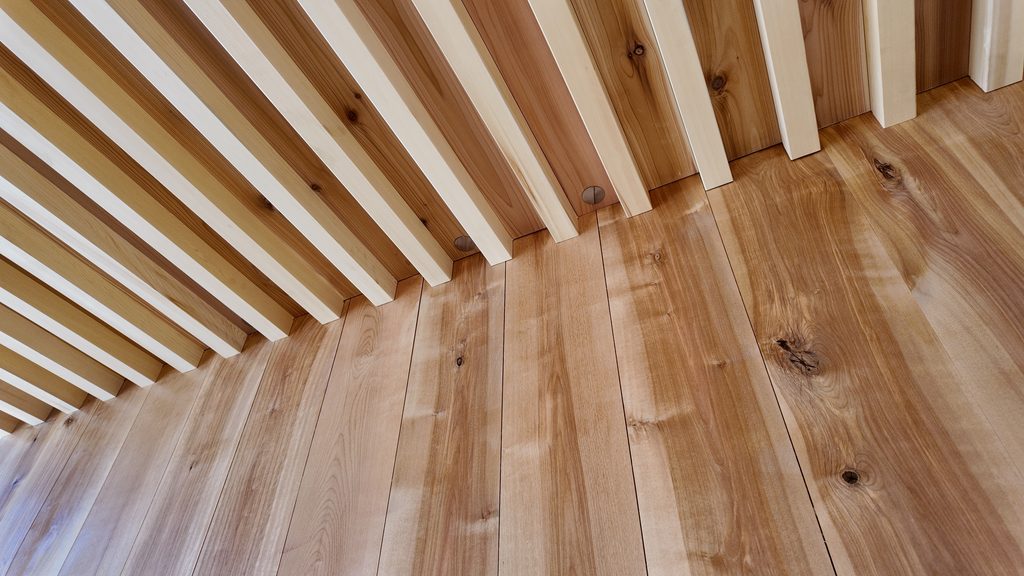
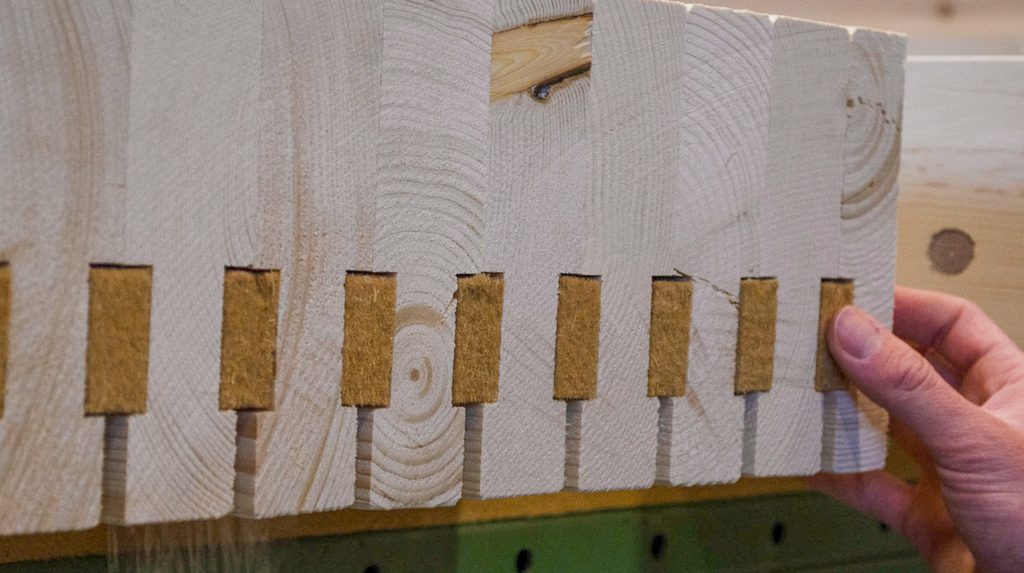
For concealed DLT applications, such as floors or ceiling that will later be covered with additional materials, panels can be produced with a simple rough finish. Wood fibre insulation can also be incorporated between the boards to increase sound dampening, making the panels particularly well suited to louder or acoustically sensitive environments.
For exposed applications, the possibilities become much more expressive. DLT panels for floors and ceilings can be customized with options including credit-card profiles, alternating offset boards that create depth and shadow, and various other surface treatments that turn the structural panel into an architectural feature. The same goes for CDLT panels for walls. Depending on the desired appearance, the BC Wood Panel can be produced with visible or non-visible dowels. Visible dowels can become part of the character of the panel, clearly expressing the all-wood construction and the mechanical connection that holds the system together. If a clean, uninterrupted surface is desired, panels can be produced with the dowels concealed. In this configuration, a layer of tongue-and-groove is hand laid on the bottom before the remaining layers are added. The hardwood dowels are then pressed into the panel without extending fully through to the finished side. This allows the panel to retain the same mechanically fastened construction while maintaining a refined, continuous wood surface on the visible face.
Together, these options allow both DLT and CDLT panels to be tailored not only to the structural requirements of a project, but also to its architectural expression, finish, and acoustic performance.
The New Facility
To accommodate our new production line, we built a 12,000-square-foot traditional timber frame manufacturing shop. The timber frame structure showcases the craftsmanship and character of traditional timber construction, while the equipment inside of it represents the next generation of wood manufacturing.
Bringing these two concepts together reflects the direction we see for our industry: combining deep knowledge of timber with technology that allows us to manufacture larger, more precise, and increasingly sophisticated building components.
A Sneak Peak at the BC Wood Panel
The BC Wood Panel made its debut at the Global Buyers Mission in Whistler, hosted by BC Wood in September. To introduce the system, we constructed a full-scale tunnel from the panels, giving visitors the opportunity to walk through the structure and experience the material at building scale.
For many attendees, seeing the system in person helped bring the concept to life.
“Walking through a full-scale demonstration of the BC Wood Panel made the whole concept come together. The warmth and character of the wood were obvious right away, but what really stood out was how solid the system felt.”
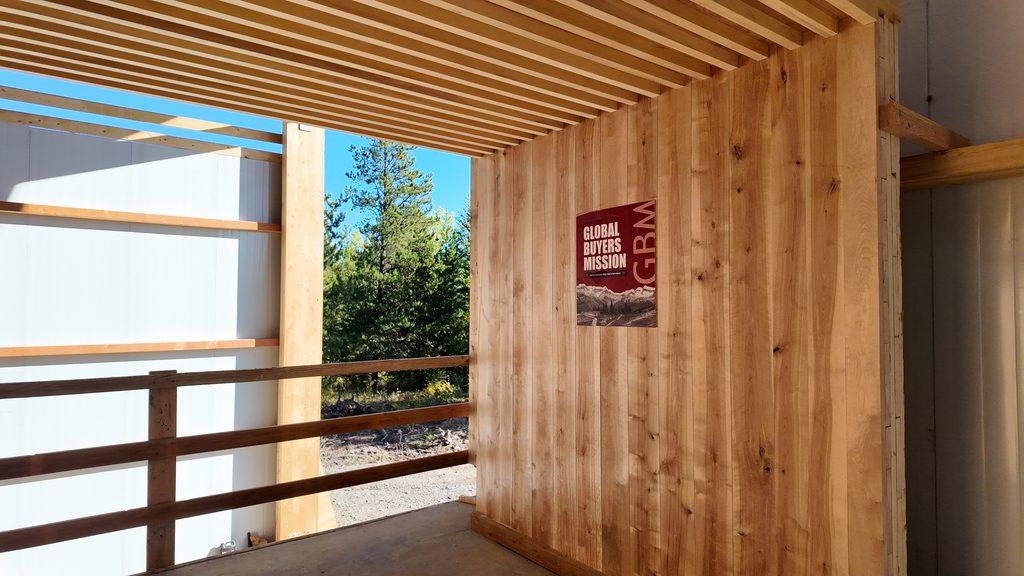
The First Projects are Underway
Our first two customer projects using the BC Wood Panel are currently in the design and production phases. An addition to a home in Wyoming will demonstrate the system in a residential application, showcasing a clean finish with non-visible dowels and Hemlock T&G, while a butcher shop in Montana will introduce it into a commercial setting with a more industrial, visible dowels look.
Together, these projects will provide an early look at how the panels can perform across different building types and design requirements. They will also represent the first installation of solid wood panels used for structural applications in North America.
New Opportunities for British Columbia
For British Columbia, the opportunity extends well beyond a single product. Advanced wood manufacturing creates new ways to turn BC fibre into higher-value, project-specific building components while expanding the role of timber in applications traditionally served by other materials. It also opens the door to making better use of available resources, including fire and pine beetle-affected timber, by finding new applications for wood that might otherwise be underutilized. This kind of manufacturing can help broaden the market for BC wood and create more value from the resources we have right here at home.